
OUR APPROACH
Therapy built around the person, not just the problem.
You aren't a diagnosis or a list of symptoms. You come to counseling with experiences, relationships, strengths, values, and questions that are uniquely yours.
At Open Frame Counseling, we take a warm, collaborative, person-centered approach that helps you understand what's happening, explore patterns, and discover new perspectives for meaningful change.
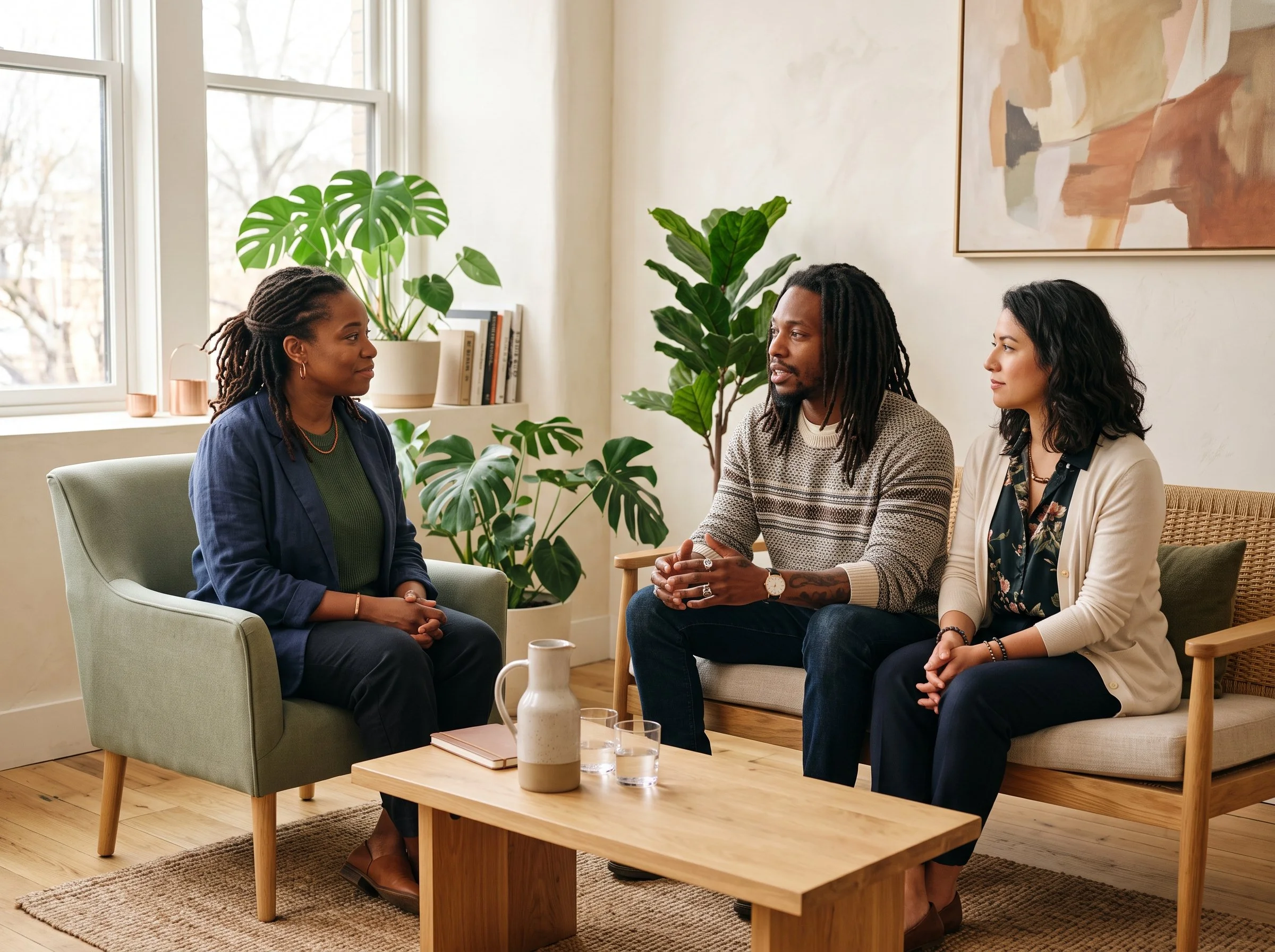
HOW WE THINK ABOUT THERAPY
You bring your story. We explore it together.
Therapy isn't about someone sitting across from you and telling you how to live your life.
At Open Frame, counseling is a collaborative process. We begin by understanding your experience from your perspective, what has happened, what you're carrying now, what matters to you, and what you hope could feel different.
Together, we can explore patterns, relationships, emotions, and different perspectives while finding ways forward that feel connected to who you are and the life you want.
THE FOUNDATIONS OF OUR WORK
WHAT GUIDES THE PROCESS
Care that combines connection with clinical knowledge.
A strong therapeutic relationship matters, but warmth alone isn't enough. At Open Frame, genuine human connection is paired with professional knowledge and evidence-based care.
WHAT THERAPY MAY LOOK LIKE
There's no script you have to follow.
Some people arrive knowing exactly what they want to talk about. Others don't. Both are okay.
Sessions may involve exploring something that happened during the week, noticing recurring patterns, considering a different perspective, or working on communication, coping, boundaries, and change. The process doesn't have to look the same every week.
During counseling, our work may involve
EXPLORING
Looking at situations from different perspectives and becoming curious about thoughts or assumptions that may have felt fixed.
UNDERSTANDING
Making sense of your experiences, emotions, relationships, and the patterns that connect them
PRACTICING
Developing ways of responding, communicating, setting boundaries, or navigating difficult situations outside the counseling room.
REFLECTING
Noticing what's changing, what remains difficult, and what you're learning about yourself along the way.